Compound Dies
We consolidate downstream operations such as tapping, riveting, and assembly into a single die. Because we design and build both dies and special-purpose machines in-house, we can discuss the upstream and downstream processes as well as the die configuration.
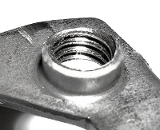
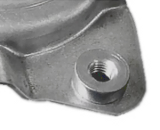
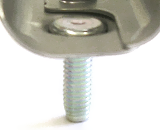
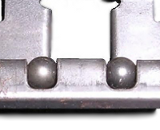
We consolidate downstream operations such as tapping, riveting, and assembly into a single die.
We design the die so that pressing and downstream operations can be performed in a single die, reducing changeovers and component handling between processes.
Consolidate processes and review quality, cost, and workload.
Stable quality
We reduce positioning across processes and variation in work to stabilize machining quality.
Cost reduction
Combine equipment, tooling, and setups for multiple processes and review the machining time required.
Labor saving
Reduce conveying and changeovers between processes and lessen work that currently relies on people.
Less work-in-process inventory and less floor space
Reduce work-in-process inventory between processes and the space required for multiple machines.
Technology for incorporating downstream operations into the die
Small machined-part photos are shown near their actual size so that the machining details are clear.
Tapping: We have experience with sizes from M3 to M8 and support materials including SPC and SUS.
Part assembly (bolts, nuts, and balls): We have experience with bolt sizes M5–M6. Nuts and balls can also be assembled, and we can propose feeding equipment as well.
Frequently asked questions about compound dies and VA/VE
Q Can our products also use a compound die?
Q Can we consult you just about process improvement and cost reduction?
Q Can we also discuss custom automation systems and special-purpose machines as part of the same consultation?
We check whether the processes can be consolidated in a compound die.
If you provide product drawings and the current process, we can propose opportunities for improvement through compound dies and VA/VE.